
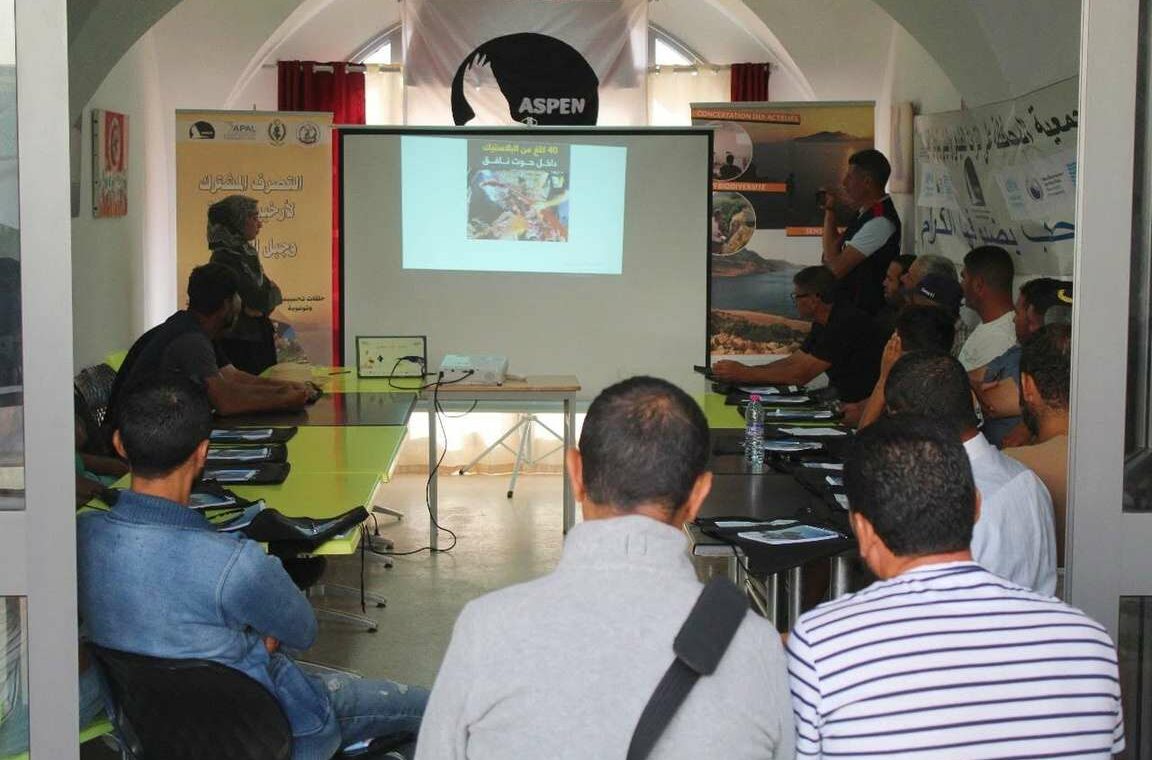
Decisions about coastal fisheries are made in rooms that coastal women are rarely in. Committees, consultations, conferences and negotiations shape licensing, subsidy and access — and the workforce that handles most of the catch after landing is usually described in those rooms by somebody else.
This service exists to change who speaks, and failing that, to make sure what is said is accurate.
Speaking and keynotes
Conference and panel contributions on women’s leadership in the blue economy, small-scale fisheries, and the gap between coastal policy and coastal practice. Delivered in Arabic, French or English.
We prefer engagements where the audience can act on what they hear — regulators, funders, buyers — over those where the discussion is the deliverable.
Facilitation and moderation
Multi-stakeholder sessions where the parties do not usually share a room: ministries and cooperatives, buyers and producers, researchers and the communities they study.
A facilitator’s real job is deciding who has not spoken yet, and making the room wait.
We design these sessions so that the people with the least institutional power speak first, before the room’s conclusions have quietly formed.
Representation
Where a cooperative or network cannot attend a process — because it falls in the fishing season, because travel is unaffordable, or because the invitation never arrived — we represent their stated position, agreed in advance and reported back afterwards.
We represent positions, not organisations in general, and we take instruction from the group rather than interpreting on its behalf.
Campaigns
- Policy briefs written for the official who has ten minutes, not the specialist who has an afternoon.
- Evidence packs assembling what cooperatives already record into a form a ministry will accept.
- Media support and spokesperson preparation, so members represent themselves rather than being quoted through an intermediary.
What we decline
We do not provide representation where we have a commercial interest in the outcome, and we do not speak for a group that has not agreed the position in writing. Both rules exist because the value of this work is entirely dependent on it being trustworthy.